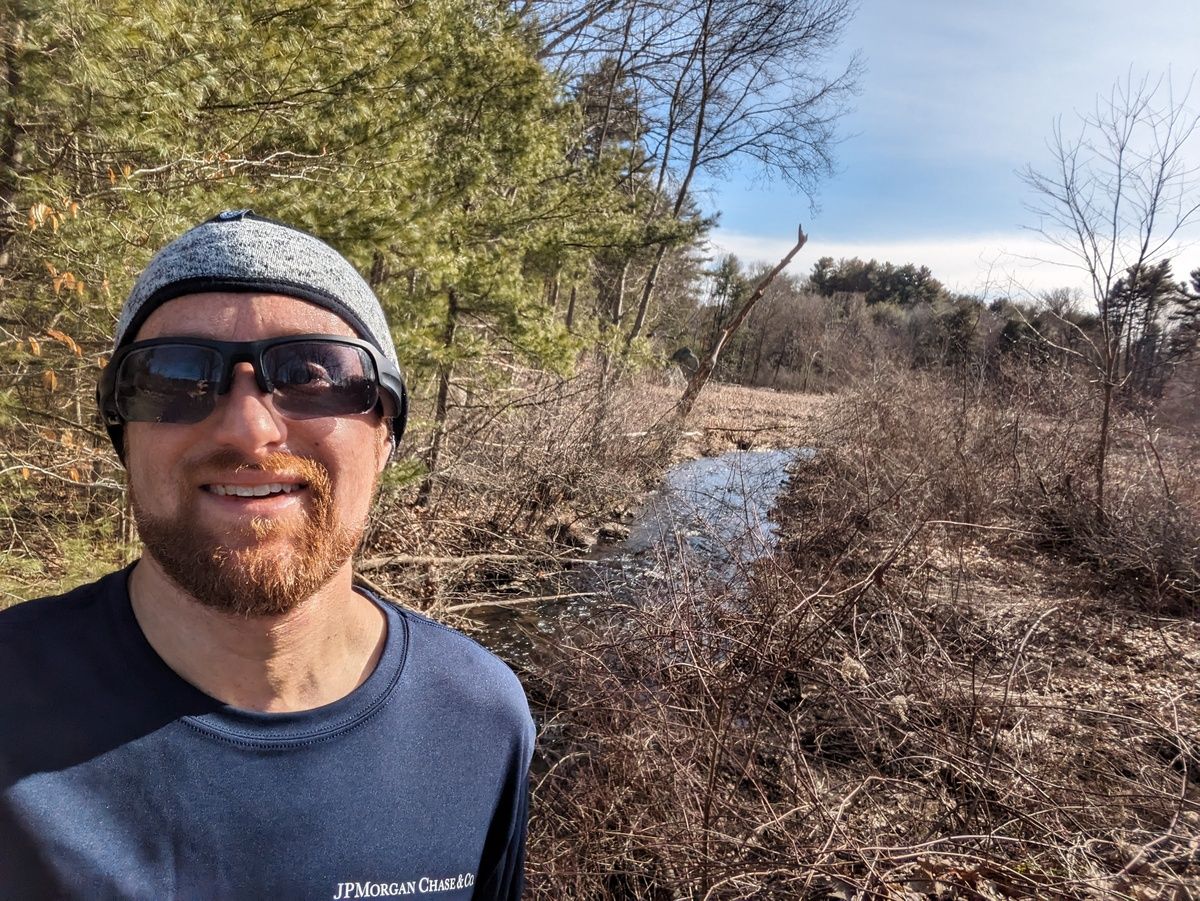

It was pretty cold, but I had an enjoyable run over to the Weatherhead Center for International Affairs at Harvard University to see a great talk by Megumi Naoi on how geopolitical disruptions shape policy preferences of Japanese firms (video should be posted soon). On the way I was able to listen to other talks for my #AcademicRunPlaylist!
First was an engaging panel on human rights and environmental due diligence processes and investors at the UCL Faculty of Laws with Lara Blecher, Stephen Park, Liz Umlas, and Dana Phillips https://www.youtube.com/watch?v=EfwGRYMGqJU
Next was "Cultures in Collision and Conversation: Essays in the Intellectual History of the Jews" by David Berger. I read this book because I wanted to learn more about the pre-1700s Jewish diaspora, and while there's some of that here (a great second chapter being the standout, as well as another interesting chapter on Sephardic and Ashkenazic messianism in the Middle Ages) much of the rest are deep cut analyses of Jewish religious thought. Having a son who's reading the primary source texts right now was immensely helpful, but if you don't have familiarity with the Torah and Jewish religious sects you'll probably be lost. It was too inside-baseball for me, but if you're interested in these topics those chapters will be good jumping off points https://library.oapen.org/handle/20.500.12657/30682
Next was "Ibn Sīnā (Avicenna)" by Peter Adamson. This book is an excellent (albeit brief) examination of the historical context, life, works, and influence of Ibn Sīnā, one of the world's most important philosophers and foundational for Islamic thought. Adamson does a good job parsing through Ibn Sīnā's biographies, as well as situating his intellectual inheritance from the deep Islamic world engagement with Greek philosophy. The analysis doesn't draw enough on modern thought for my taste, but the setup is excellent for the proof of the existence of God. It's still elegant and thought-provoking today, and is appropriately positioned as the denouement of this volume. Highly recommend https://global.oup.com/ushe/product/ibn-sina-avicenna-9780192846983
Last was "Indigenous Statistics" by Chris Andersen, Maggie Walter, Tahu Kukutai PhD FRSNZ, and Chelsea Gabel. This book is an absolute masterclass in how to engage in data collection, data science, and social science more broadly. The focus here is on how data interacts with Indigenous peoples, examining the issues from multiple angles - data sovereignty, the racist roots of statistics, methods for engaging in Indigenous statistical research, and more. There are excellent case studies here as well, and even researchers/practitioners who don't engage in data collection on this population will benefit immensely from the lessons here around how to think about data subjects, communities, and the nature of data itself. Highly recommend https://www.routledge.com/Indigenous-Statistics-From-Data-Deficits-to-Data-Sovereignty/Andersen-Walter-Kukutai-Gabel/p/book/9781032002507
