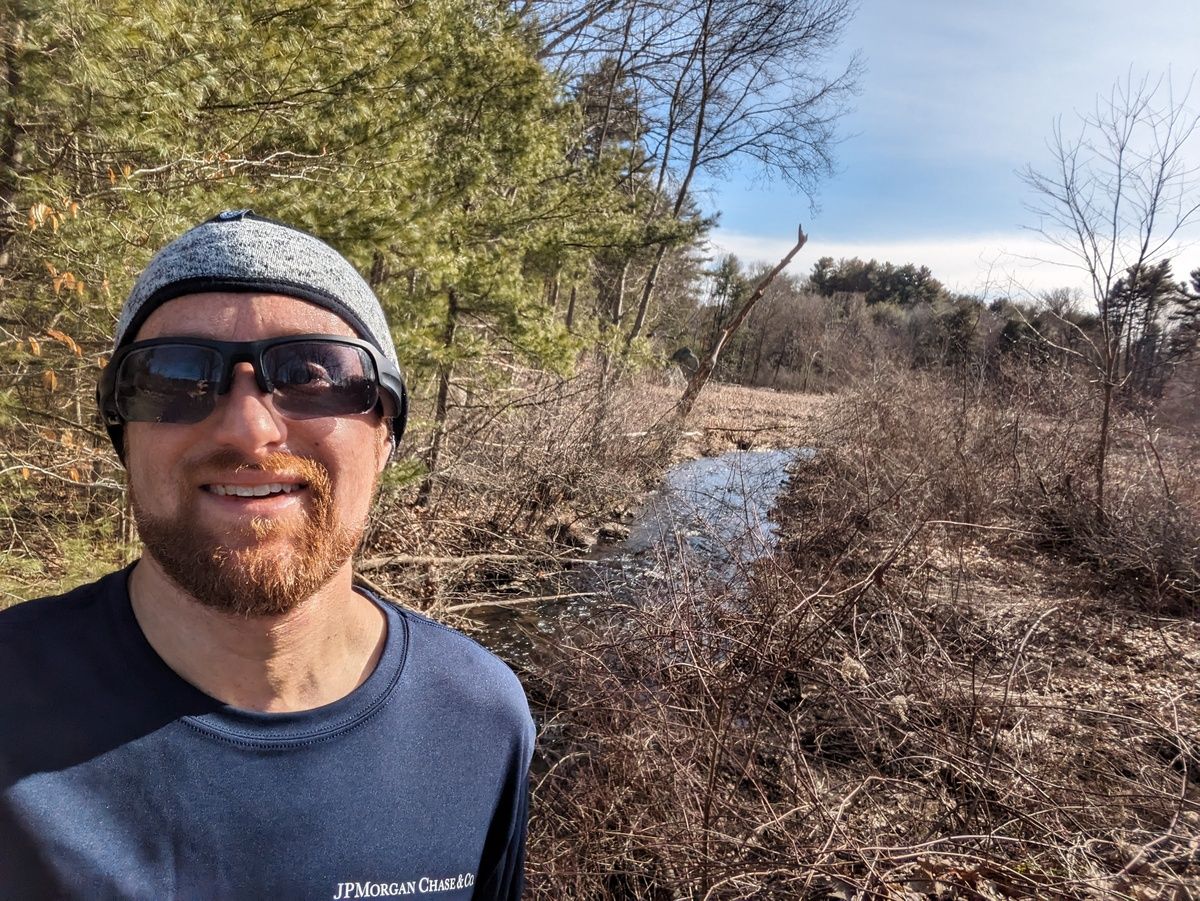

It was a chilly but gorgeous day, and so after putting on my jacket for hopefully the last time this season I went out for a good run and listened to talks for my #AcademicRunPlaylist!
First was a mind-bending discussion with Romain Brette on why we need to reconceptualize neuroscience on the Brain Inspired podcast. Brette deftly deconstructs many of the taken for granted assumptions of the field, clearly articulating why thinking of each portion of the brain and the body as organisms and processes in their own right helps move away from unproductive framings like neural prediction and computation. Highly recommend https://www.youtube.com/watch?v=T3zErsyZMo8
Next was an incredible talk by Alan Benson on how subjective "potential" assessments in promotions contribute to gender disparities at a large retailer (*cough* Walmart *cough) at the Women and Public Policy Program at the Harvard Kennedy School. I read an earlier version of this paper years ago, and it's an important look at what drives gender gaps and the potential of algorithmic interventions. Highly recommend https://www.youtube.com/watch?v=B2F4Stx0dPY
Next was a fantastic conversation between Ann Lipton and Michael Levin on the very interesting precatory proposal at BJ's and the goals of the seemingly pointless activist push at Snapchat on the Shareholder Primacy podcast. Highly recommend https://www.youtube.com/watch?v=vqo9ZpNMlFM
次はYohei Tsunemiによる「日本の就活」でした。外国人として、この本は非常に興味深ったです。日本の就活、特に新卒一括採用、は欧米の制度と大幅に異なりますので、この本の基本的な説明や80年代からの歴史が参考になりました。常見さんは細かくこのプロセスを調べて、問題点や歴史的な進化を説明します。ウェブプラットフォームの影響章は面白くて、本当に生成AIが発生させている問題と似ています。日本人にとってこの本はあまりに基本的過ぎると思いますが、もし自分の採用経験は数十年前でしたら少し参考になるかもしれません。おすすめです!https://www.iwanami.co.jp/book/b10151795.html
Last was "The Chinese and the Iron Road," edited by Gordon Chang and Shelley Fisher Fishkin. This compilation of different essays focused on various aspects of the Chinese role in building the transcontinental railroad is a fascinating, eclectic mix of historical detective work, economic history, anthropology, and archeology. This work is all the more important because, as is continually emphasized here, there is essentially no written record of this extremely important group of workers. The interdisciplinary nature of the different contributions, made necessary by this data gap, is nicely organized and contextualized by the editors, making this feel much more like a coherent book than similar academic collections. Standouts for me were the chapter on remittances by Yuan Ding and Roland Hsu, the chapter on encounters between Chinese railroad workers and Native Americans by Huang Hsinya and the chapter on these workers in photography by Denise Khor. The last chapter tried a bit too hard to whitewash Leland Stanford's extremely racist and exploitative stance towards Chinese people (call me old fashioned but the fact that he didn't abuse his personal Chinese servants means essentially nothing against the vast harms, including death, he caused to tens of thousands of Chinese people). That aside, this is an excellent, insightful book on an important part of American, Chinese, and international labor history. Highly recommend https://www.sup.org/books/asian-american-studies/chinese-and-iron-road
