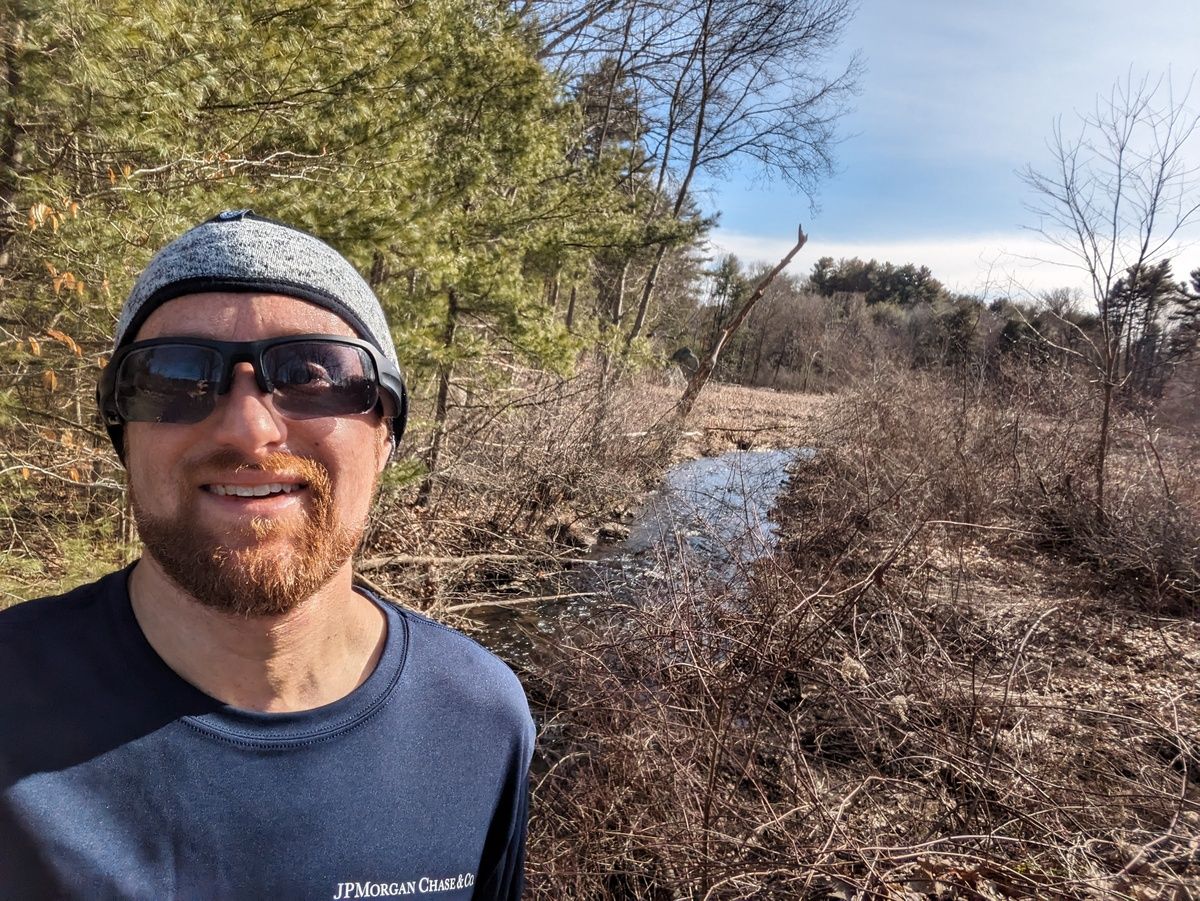

So the end of the week was a bit cold and windy, but I was nicely bundled up while I listened to talks and books for my #AcademicRunPlaylist!
First was an interesting talk by Ahmed H. Qureshi on using physics-based priors for robot motion learning at Stanford University https://www.youtube.com/watch?v=RKFRO_G4YkA
Next was "Major Trade-Offs" by Corey Moss-Pech. Moss-Pech uses deep qualitative research to crack the foundations of economic skills dogma, showing that the skills that technical majors learn in college are rarely used in their first jobs. In addition, her sample shows that entry level job descriptions are extremely poor indicators of what people actually need to accomplish the role. There's other great work here on the types of internships that tend to lead to full time offers, as well as how liberal arts majors differ. While these findings aren't surprising for many folks with management experience, this should act as a wakeup call to economists and policymakers who use majors and job descriptions as a proxy for what skills are necessary for the future workforce. Highly recommend https://press.uchicago.edu/ucp/books/book/chicago/M/bo246051255.html
Next was "Mexico: A 500-Year History" by Paul Gillingham. It feels weird to say a book is too short when it tops out at over 750 pages, but given the ground Gillingham tries to cover here more deeply examining a number of topics would have made this book even better. Strangely there's comparatively more space spent on the 16th century than the 20th, which while interesting certainly leaves large gaps when it comes to more modern Mexican history. However as a strong introduction to the topic, especially on the founding of Mexico and its unique multicultural history, this is still a useful volume. Highly recommend https://groveatlantic.com/book/mexico/
Last was "How to Change a Memory" by Steve Ramirez. If you like memoirs with a dash of science, this is the book for you. Ramirez paints a moving picture of his journey in neuroscience, narrating his graduate school journey with short descriptions of related research. If you're looking for deeper descriptions of that science, however, you'd be better served by picking up his actual papers https://press.princeton.edu/books/hardcover/9780691266688/how-to-change-a-memory
